Fused right, HDPE outlives the haul road. We fuse, install, tie in, and repair high-density polyethylene pipe for mines and processing plants across the West, and every joint gets done to the standard.
Tailings, slurry, and aggressive process water eat steel pipe from the inside out. Fused HDPE behaves differently: the welded joint is as strong as the pipe itself, so a properly fused line runs leak-free, shrugs off corrosion and abrasion, and flexes with ground movement instead of cracking at a coupling.
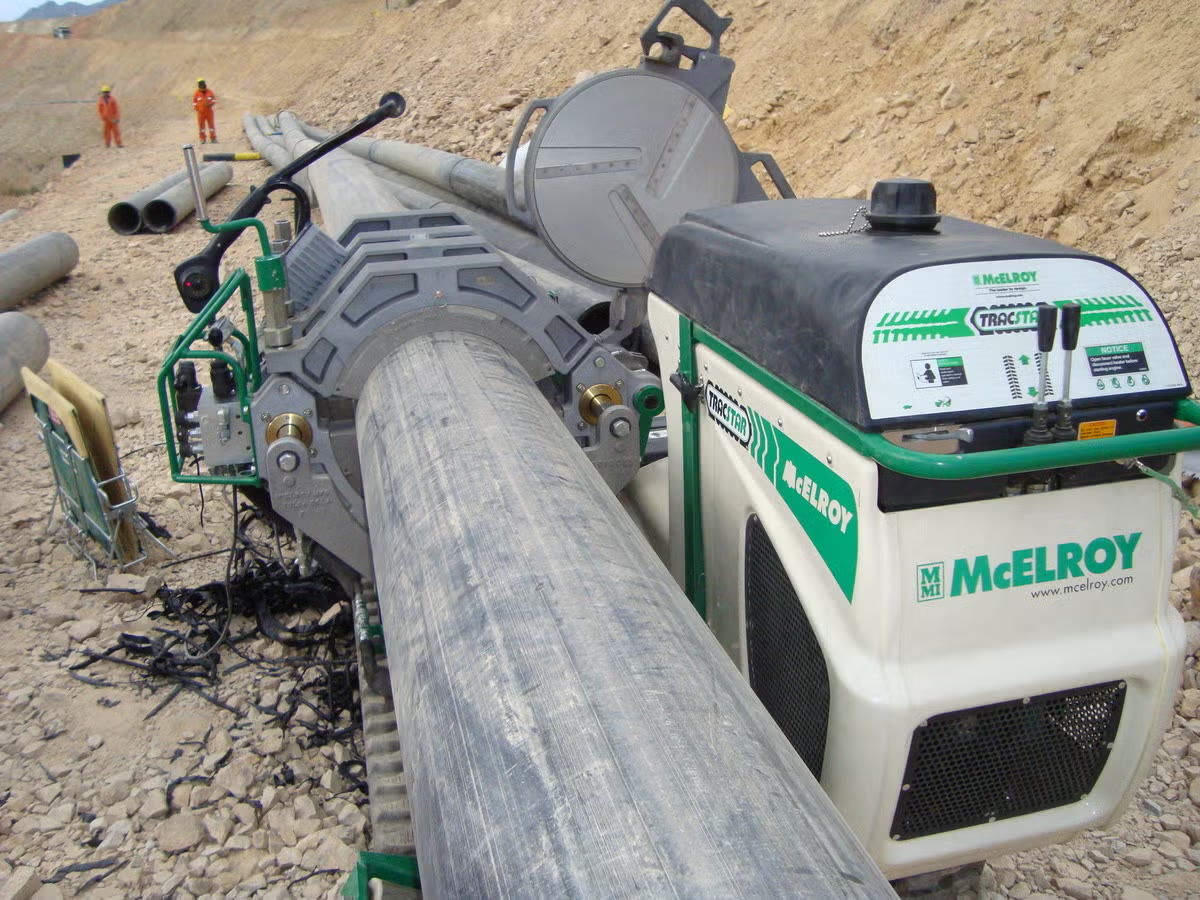
The catch is in that word "properly." Poly welding is a discipline. Heat, pressure, and cool-down time make or break a butt fusion joint, and a bad one hides until it fails under load. That's why the crew matters more than the pipe.
If it moves water, slurry, or tailings around your operation, it's a candidate for poly. These are the lines we build and keep running.
Abrasive service is where HDPE shines. Installation, extensions, wear-section replacements, and repairs on the lines that carry your tailings and slurry, planned around your operation instead of against it.
Pit and underground dewatering lines that go in fast and hold pressure. When water is costing you bench time, the fusion crew shouldn't be the bottleneck.
Fresh water, process water, and reclaim circuits between ponds, plants, and thickeners. Corrosion-free lines for the water your mill can't run without.
Long pulls across rough ground are HDPE's home turf. Fusion sequencing, stringing, and placement planned for terrain, weather, and your schedule.
Where poly meets steel: flange adapters, spool pieces, and welded transitions handled by a crew that does both sides of the joint, inside one outage window.
Damaged sections cut out and fused back in, lines rerouted as the pit grows, and emergency response when a line lets go on a Friday night.
Also at work off the mine site: HDPE process and utility lines for southern Idaho's dairy, food, and agricultural processing plants, fused by the same crews under the same standard.
A fused line is only as good as its worst joint, so we don't treat fusion quality as a matter of trust. We treat it as a matter of records.
Bring us the pipe spec and duty and we'll confirm equipment fit for your diameter and pressure class on the first call.
Your project team runs the job; our operators and fusion equipment make the joints. Clean handoff, joint logs included, priced on the same transparent time and materials as everything we do.
We take the line from scope to service: fusion sequencing, stringing and placement, tie-ins and steel transitions, pressure test, and documentation, with welding and millwright support from the same mobilization.
Pipe spec, fittings, terrain, and schedule. We plan fusion sequences around your operation so production keeps moving.
Joints made to ASTM F2620 and logged as they're made, placement and tie-ins executed by the same journeyman-led crew.
Pressure-tested, documented, and turned over ready to flow, with the fusion records your engineers want on file.
Scope varies by project, so bring us the pipe spec and duty. Fusion procedures follow ASTM F2620, and a coordinator will confirm equipment fit for your diameter and pressure class on the first call.
Yes. Our crews carry MSHA and industrial facility experience, we're an ISNetworld member contractor, and we badge in under your safety program. Remote and camp-based work is normal for us.
For abrasive and corrosive service, poly usually wins on lifetime cost: no corrosion, high abrasion tolerance, and fused joints with no gaskets to weep or couplings to work loose. Steel still has its place, which is why our crews do the transitions between the two.
Both. We can run fusion support for your installation crew, or take the full scope: fusion, placement, transitions to steel, tie-ins, and pressure testing, with welding and fabrication support from the same team.
Every joint is fused to ASTM F2620 procedures and logged, and the line is pressure-tested before handoff. You get the records, not just our word.
We're mobile-first out of Twin Falls with crews that travel across Idaho, Nevada, Alaska, Washington, and Arizona. Call with the scope and a coordinator will give you a straight answer on timing for your site.
Tell us the pipe, the duty, and the window. A coordinator will come back with crew, equipment, and timeline.
Call (208) 320-3470